



Paintless Repair for Large Dents
Large Dent Removal With Factory Paint Preserved
FSDAVCFEBFEVSDDVFSD

FSDAVCFEBFEVSDDVFSD
FSDAVCFEBFEVSDDVFSD
Large Dent Removal Without Repainting
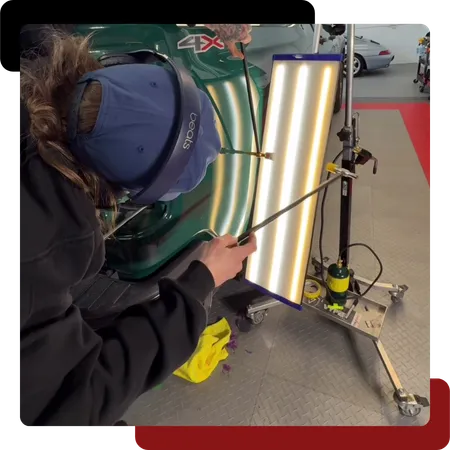
Large dents can look like a body-shop job, but many can be corrected with paintless dent repair. If the factory paint is still intact, we can push and shape the metal from behind the panel and keep the finish original. This approach is common for large door dents, fender dents, and quarter panel hits that haven’t torn the metal.
Before any large dent removal, we check depth, body lines, and access. Some big dent repair needs trim or liner removal so tools can reach the low area. When PDR services fit the damage, you avoid filler, sanding, and repainting, and the repair often costs less than many dent repair shops. You get clear pricing, a realistic timeline, and a panel that matches the rest of your vehicle when driving away.
Paintless Dent Repair for Big Dents
Paintless dent repair large dents depends on two things: the paint must be sound, and the metal must be able to return to shape. Many larger dents are shallow across a wide area, so the panel can be moved back without breaking the clear coat. That’s why large car dent repair after a parking lot impact, a soft bumper tap, or a hail strike on a flat panel can still qualify for no paint dent repair.
For deep dent repair, we focus on access and control. We may remove a liner, tail light, or interior trim to reach the back side. Using rods and a reflection light, we raise the low spot in small steps, then blend the surface so it looks even. For panel dent repair on edges, we protect the body line and work the crease until it relaxes.
Big dent removal is not one-size-fits-all, so we quote after a close look. We’ll tell you if body line dent repair is likely to come out clean, or if stretched metal will leave a trace. When it’s a good match, you get dent removal without paint and a strong value compared with repainting. Most jobs finish the same day.
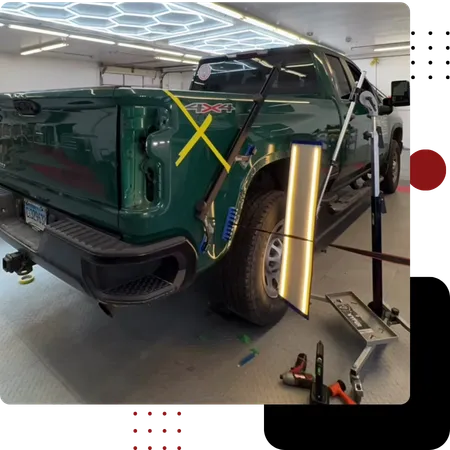
How We Fix Deep Panel Dents
Large dent repair starts with lighting. The lines in the PDR light show every low and high spot, so we can map the damage before touching the panel. We also check the backside for braces and for how the dent sits on the curve. This step sets the plan for big dent repair that looks natural afterward.
On a quarter panel dent repair, access can be tight, so we may work through the liner or trunk trim. For a creased dent repair, we lift the deepest part first, then feather the edges so the surface flows. If the dent is open and shallow, glue pulling can help start the movement without drilling holes.
After shaping, we blend the metal so you don’t see tool marks or ripples in the sun. Body line areas get extra time because they show flaws fast. We recheck the panel from multiple angles, then reinstall any trim we moved. The goal is a solid result that fits your vehicle’s original look without repainting or filler.
Large door dent repair often happens where the door skin flexes and the dent sits near an inner beam. We look for safe access points and protect wiring, glass, and seals while we work. Fender dent repair can be similar, especially near the wheel opening. If the paint is unbroken, we can often remove large dents without repainting and keep the panel original. This is a practical choice when you want fast results and less downtime.
Severe dent repair depends on how much the metal stretched. A wide dent may finish near perfect, while a sharp hit can leave a faint mark even after skilled work. We’ll explain what you can expect before we start. If PDR isn’t the right call, we’ll say so. When it is, large dent removal is a strong value and avoids paint blend lines that can stand out later. Photos help give a first quote.
Frequently Asked Questions About Hail Repair
What is paintless dent repair for hail damage?
Paintless dent repair (PDR) is a technique used to remove hail dents without sanding, filler, or repainting. Specialized tools are used to massage the metal back into shape from behind the panel. It preserves your vehicle’s original paint and is approved by most insurance companies.
Does Swift PDR offer mobile hail damage repair?
No, we only perform in-shop hail damage repairs. This ensures we have the proper lighting, tools, and controlled environment necessary for precise, high-quality paintless dent removal.
How do I know if my hail damage qualifies for PDR?
If the paint isn’t cracked or chipped and the dents are shallow, your vehicle is likely a good candidate. Our team performs a full inspection using PDR lights to assess each dent and determine eligibility.
Why is it important to fix hail damage quickly?
Even small hail dents can lead to clear coat fractures, which may allow moisture to reach the metal underneath. This can result in rust and corrosion if not repaired promptly.
Can you repair hail dents on all parts of my vehicle?
Yes. We regularly remove dents from roofs, hoods, trunks, fenders, and door panels. Whether it’s a flat surface or a body line, our certified technicians can restore your vehicle’s original shape.
Will filing a hail damage claim raise my insurance premium?
In most cases, hail damage is considered a comprehensive claim, which typically does not increase your premium. We can guide you through the claim process and provide the documentation your insurer needs.
How long does hail damage repair take?
Most hail repairs take between 1 to 3 days, depending on the number of dents and panel access. We’ll give you a clear timeline after our inspection and estimate.
Is paintless dent repair cheaper than traditional body repair?
Yes. PDR is often significantly more affordable because there’s no sanding, repainting, or parts replacement. It also reduces downtime since most jobs are completed faster.
Do I need an appointment for a hail damage inspection?
Appointments are recommended but not required. You can stop by our shop or upload photos of the damage through our website to start your estimate.
Does Swift PDR guarantee its hail damage repairs?
Yes. All of our hail damage repair work is backed by a quality guarantee. We complete every job with a final inspection to ensure your car looks factory-fresh before it leaves our shop.
Recent Paintless Dent Repairs
Large Door and Fender Dent Repair
Body line dents and creases take time because the panel shape has to match, not just the center of the dent. We use slow pushes and constant checks to keep the contour. This is key for fenders, doors, and quarter panels where reflections show everything.
If your dent is near a handle or mirror, tell us up front so we plan safe access. Remove loose items from the trunk and door pockets. A clean panel helps the light read the metal. We can then start work right away for you.
After the repair, you can wash the vehicle as normal since there’s no fresh paint. We suggest checking the panel in daylight before you leave. If you spot anything, we’ll review it on the spot and adjust as needed so the finish looks even everywhere.
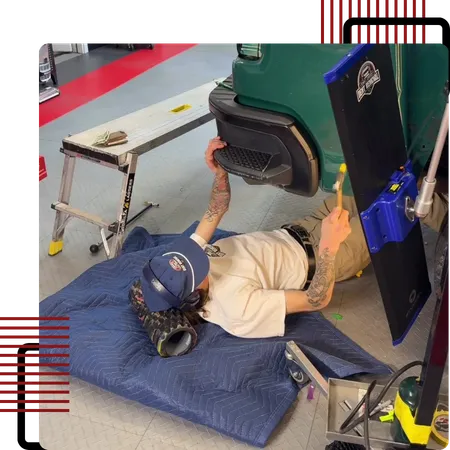
Pricing for large dent repair depends on size, depth, and where the dent sits on the panel. A deep dent repair on a body line takes more time than a wide shallow hit in the middle of a door. Access also matters, since panel dent repair may require moving trim or liners. To get a fast estimate, send clear photos from a few angles and include the year, make, and model. We’ll reply with options.
If you have hail or multiple dents, group photos help us plan time and cost. For single big dent removal, we can often schedule quickly once we confirm access and paint condition. Our dent repair service focuses on dent removal without paint, so there’s no waiting for paint to dry. You can book online or call with questions. We’ll give a straight answer on what PDR can do and what results you should expect today.
Schedule Your Large Dent Repair Quote
Large dents don’t have to mean a repaint. If the paint is still solid, paintless dent repair can bring the panel back while keeping the factory finish. This is a smart route for large dent removal on doors, fenders, and quarter panels, and it often costs less than big repairs that need filler and paint. Share photos, and we’ll tell you if PDR is a good fit.
People compare dent repair shops on price, but the finish matters most. At East Coast Dents, we aim for clean reflections and straight body lines, not quick fixes. Our affordable paintless dent repair process is built for real-world damage like large door dents and creased dent repair. You’ll get a clear quote and timing, plus honest notes on limits when metal is stretched before you book.
To start, send photos in good light, taken straight on and at an angle, so the dent edges show. We’ll confirm whether we can remove large dents without repainting and what the job will cost. If you’re ready, book online and pick a time that works. Get a large car dent repair done with no paint dent repair methods and drive away with a better-looking panel right now.
Frequently Asked Questions
Can a large dent be repaired without repainting?
Yes, many large dents can be fixed with paintless dent repair if the factory paint is still intact and the metal hasn’t been overstretched. Large dents are often spread across a wider area, which can actually make them a good PDR candidate when the impact is softer. The deciding factors are paint condition, dent depth, and whether the dent crosses a sharp body line or edge.
What makes a big dent qualify for paintless dent repair?
The biggest qualification checks are intact paint, manageable metal stretch, and workable access behind the panel. A wide, shallow dent in a door or fender may qualify even when it looks severe at first glance. Dents that are very sharp, heavily creased, or located on tight edges are harder because the metal is under more tension and the finish is more likely to show small imperfections.
Are large door dents harder to repair than fender dents?
It depends on the structure behind the panel. Door skins often have beams, wiring, and tight internal supports that affect where tools can sit and how pressure can be applied. Fender repairs can be easier in open areas but more difficult near wheel openings where curves and edges tighten up. The final difficulty comes down to access points and how much finishing is needed to keep reflections straight.
Can PDR fix a creased dent or body line dent on a large panel?
Sometimes, but crease dents and body lines raise the difficulty because the goal isn’t just lifting the low area. The panel shape has to match the original contour and the line must look natural in sunlight. Some line dents can be restored very cleanly, while others may finish with a faint trace if the metal is stretched. A close inspection is the only reliable way to set expectations before you commit.
Why do large dents take more time than small dents?
Large dents usually have more surface area to correct, which means more shaping and more refinement. Even when the dent moves quickly at first, the finishing phase takes time to remove subtle highs and lows so the panel doesn’t look wavy in real light. The time also increases when trim, liners, or interior panels must be moved to reach the backside safely.
Will you need to remove trim or interior panels for large dent removal?
Often, yes. Large dent repair commonly requires gaining access through liners, tail lights, trunk trim, or interior door panels so tools can reach the low area at the correct angle. This is normal in PDR and helps achieve a cleaner finish. When access is limited, glue pulling may be used to start the movement, followed by careful blending.
How do you know if the metal is stretched too far for PDR?
Stretched metal usually shows as a dent that is very deep, very sharp, or has strong tension around it. During inspection, we look for crowns, tight creases, and how the panel reacts under a reflection light. If the panel can’t return to its original contour without leaving distortion, we’ll explain what result is realistic and whether another repair path makes more sense.
Can paintless dent repair remove a large dent completely?
In many cases, yes, especially when the dent is wide and shallow and the paint is intact. With sharp impacts or dents near edges and braces, PDR may still improve the damage significantly, but a perfect outcome can be harder. The goal is always a panel that looks normal in everyday lighting, and the estimate is where you’ll get a clear expectation of the likely finish.
How much does large dent repair cost compared to body shop repair?
PDR is often less expensive because it avoids filler, sanding, paint materials, and paint blending labor. Pricing still depends on the dent’s size, depth, location, and access needs, so there isn’t one flat rate that fits every big dent. The best way to get a useful number is to share clear photos and then confirm the plan in person so the quote matches the real work required.
What photos should I send to get a large dent repair quote?
Send one straight-on photo, one angled photo that shows the dent edge, and one wider photo that shows where it sits on the vehicle. Good lighting matters, so natural daylight or a bright garage light works best. Include the year, make, and model, and mention the panel location such as door, fender, or quarter panel. With that, you’ll get a much more accurate starting estimate and next steps.
Contact Info
Service Hours
Social Media
MON, TUE, THU, FRI: 9am-5pm
WED, SAT, SUN: Closed
Home
Services
Service Areas
Blog
About
Contact
Contact Info
Service Hours
MON, TUE, THU, FRI: 9am-5pm
WED, SAT, SUN: Closed
Social Media
Licensed & Insured
©2026 East Coast Dent Removal
Powered by: Customers.Plus